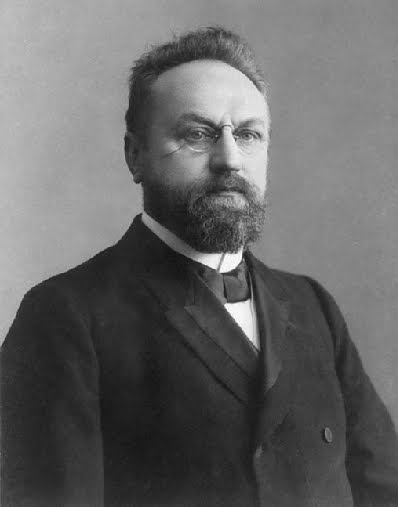
Serving God with His people at Faith OPC has been a great joy and blessing. When I grow up, I want to umpire Little League Baseball. I will revel on that day when I can say to a 10-year-old boy after four pitched balls, "Take a walk in the sunshine."
My wife of 30+ years, Peggy, consistently demonstrates the love of Christ and remains my very best friend. Our six children, our four lovely, sweetie-pie daughters-in-law, and our four grandchildren serve as resident theologians.
Where God exerts his rule through his Word and Spirit, the effects of sin are healed. Thus the kingdom is like a great banquet (Matthew 22:2) and is a state of total fulfillment of blessedness (Matthew 5:3, 10). This healing is always partial, because the kingdom is not fully come, yet this healing is substantial, because the kingdom is already present.
Edmund Clowney writes that kingdom evangelism must have a holistic focus:
“The renewal of Christ’s salvation ultimately includes a renewed universe… there is no part of our existence that is untouched by His blessing. Christ’s miracles were miracles of the kingdom, performed as signs of what the kingdom means…His blessing was pronounced upon the poor, the afflicted, the burdened and heavy-laden who came to Him and believed in Him…The miraculous signs that attested Jesus’ deity and authenticated the witness of those who transmitted the gospel to the church is not continued, for their purpose was fulfilled. But the pattern of the kingdom that was revealed through those signs must continue in the church…Kingdom evangelism is therefore holistic as it transmits by word and deed the promise of Christ for body and soul as well as demand of Christ for body and soul.” [from a chapter, “Kingdom Evangelism,” by Clowney, found in the book The Pastor-Evangelist (edited by Roger Greenway, 1987]
More from the book by Timothy J. Keller, Ministries of Mercy.
A man’s hands were wrapped to protect himself—he looked like a boxer with gauze and tape around his knuckles—and he was on a bed lying hemmed in, much like a large tent, with a mesh of nylon netting. He only moaned as I spoke with him. I read Psalm 23 to him this past Thursday—and he brightened up. I reflected with him on the Lord’s shepherding mercies. I spoke. He moaned. I prayed. He moaned. He didn’t/he couldn’t make eye contact with me. But his countenance told me that he was listening. I ministered with him for about 20-25 minutes. God’s providences are always gift-wrapped. Holistic gifts, encircling both body and soul, encompassing word and deed, are the ones that present the incarnation to us. God spoke out Himself; God enfleshed Himself. Word and deed, holistic stuff...a new creation already on the way.
The kingdom of God is power, God’s ruling power present to heal all the curse of sin. It moves the people of God to meet psychological, social physical needs, bringing God’s kingly blessing as far as the curse if found.
“If I drive out demons by the Spirit of God, then the kingdom of God has come upon you” (Matthew 12:28).
“Do not be afraid, little flock, for your Father has been pleased to give you the kingdom. Sell your possessions and give to the poor. Provide purses for yourselves that will not wear out, a treasure in heaven that will not be exhausted” (Luke 12:32-33).
Francis Schaeffer has shown us that, because the kingdom is present partially, but not fully, we must expect substantial healing, but not total healing in all areas of life.
Quoted from Timothy J. Keller, Ministries of Mercy , p. 53
Substantial healing; ministries of mercy, even tiny steps, are weighty, influential, noticeable, and game-changers. THAT is doing the works of repentance, seen, for instance, from the preaching of John the Baptist.
Ken Myers writing about C.S. Lewis on method of presenting Christ
“Lewis’s imaginative skills were thus focused less on the mere credibility or plausibility of belief (which are the concerns of most apologists) and more on the ramifications of belief: If the gospel is true, here is how the world would look. Even ‘belief’ had a more comprehensive scope in his thinking than most apologists recognize. The gospel wasn’t just a message about getting saved; it was a message of salvation in the context of a bigger story about the meaning of everything. It presupposed a cosmology and a rich anthropology. As in the Creed, Lewis’s defense of the faith began with a tacit but rich affirmation of the Maker of heaven and earth, who made all things in a particular way, the shape of which his creatures would do well to honor.” Ken Myers in the recent Touchstone Magazine, “Contours of Culture,” Sept/Oct 2010.
Lord, help me show people just how great You are; what Your world is like and what it will be like more and more since Jesus is subduing more and more for His own name, and Dear Father, You show them life in the Big Picture of things—for the glory of Jesus’ Lordship. Amen.
The Dutch theologian Herman Bavinck, 1854-1921, spills a great can of beans on the how the Lutherans and the Reformed have observed matters on the use of the law in the believer's life.
This is pipeline stuff, and hang ten and cowabunga, and all that:
“Viewed concretely, law and Gospel differ not so much in that the law always meets us in the form of command and the Gospel in the form of promise, for the law too has promises and the Gospel too has warnings and obligations. But they differ especially in content: the law demands that man work out his own righteousness, while the Gospel invites him to renounce all self-righteousness and to receive the righteousness of Christ, to which end it even bestows the gift of faith.
Law and Gospel stand in that relationship not just before and at the point of conversion; but they continue standing in that relationship throughout the whole of the Christian life, all the way to the grave.
The Lutherans have an eye almost exclusively for the accusing, condemning work of the law and therefore know of no greater salvation than liberation from the law. The law is necessary only on account of sin.
According to Lutheran theology, in the state of perfection there is no law. God is free from the law; Christ was not subject to the law for Himself at all; the believer no longer stands under the law. Naturally, the Lutherans speak of a threefold use of the law, not only of a usus politicus (civilis), to restrain sin, and a usus paedagogicus, to arouse the knowledge of sin, but also of a usus didacticus, to function for the believer as a rule of living. But this last usus is nonetheless necessary simply and only because and insofar as believers are still sinners, and must still be tamed by the law, and must still be led to a continuing knowledge of sin. In itself the law ceases with the coming of faith and grace, and loses all its significance.
The Reformed, however, have thought about this in an entirely different way. The usus politicus and the usus paedagogicus of the law became necessary only accidentally because of sin; even with these uses aside, the most important usus remains, the usus didacticus or normativus. After all, the law is an expression of God’s being. As a human being Christ was subject to the law for Himself. Before the fall Adam had the law written upon his heart. With the believer it is again written upon the tablets of his heart by the Holy Spirit. And all those in heaven will walk according to the law of the Lord.
The Gospel is temporary, but the law is eternal and is restored precisely through the Gospel. Freedom from the law consists, then, not in the fact that the Christian has nothing more to do with the law, but lies in the fact that the law demands nothing more from the Christian as a condition of salvation. The law can no longer judge and condemn him. Instead he delights in the law of God according to the inner man and yearns for it day and night.
Therefore, that law must always be preached to the congregation in connection with the Gospel. Law and Gospel, the whole Word, the full counsel of God, is the content of preaching. Among Reformed people, therefore, the law occupies a much larger place than in the teaching of sin, since it is also part of the teaching of gratitude.” [Here Bavinck has a footnote providing bibliographical references relating to the views of Luther, Zwingli, Calvin, Zanchius, Witsius, De Moor, Vitringa, Schneckenburger, Frank, and Gottschick.]”
(from paragraph 521 of Herman Bavinck’s Gereformeerde Dogmatiek, 3rd unaltered edition, vol. 4 (Kampen, J. H. Kok, 1918), taken from this translation from the Dutch).
From Immanuel OPC’s Pastor, Marc Garcia, see his blog here, HT: John Mahaffy.
God's saving work as a package; get Christ, you get all
“According to the Lutheran, the Holy Spirit first generates faith in the sinner who temporarily still remains outside of union with Christ; then justification follows faith and only then, in turn, does the mystical union with the Mediator take place. Everything depends on this justification, which is losable, so that the believer only gets to see a little of the glory of grace and lives for the day, so to speak. The [Reformed] covenantal outlook is the reverse. One is first united to Christ, the Mediator of the covenant, by a mystical union, which finds its conscious recognition in faith. By this union with Christ all that is in Christ is simultaneously given. Faith embraces all this too; it not only grasps the instantaneous justification, but lays hold of Christ as Prophet, Priest, and King, as his rich and full Messiah.”
[Princeton theologian: Geerhardus Vos, in Redemptive History and Biblical Interpretation, a Presbyterian and Reformed Publishing Co. publication, p. 256]
Is sanctification to be viewed as an expression of gratitude?
In the DVD series What Did You Expect, as the teaching moves along, Tripp does a great job of encouraging the believer to practice going to Christ in order to die to self, and it’s here that grace and gratefulness become marks of discipleship and growth.
Gratefulness gets a lion share of Tripp’s concern. He develops the question and then answers: on what basis are we stirred to motivation to God’s service, for sanctification? It’s gratefulness. He who is forgiven much, loves much. We love because He first loved us. This has at least three sound aspects: 1) It uses Scriptural language: We love because He first loved us (1 John 4:19). 2) We’re reminded of God’s work, not ours. We serve Him not to obtain salvation, but to express thanksgiving for the gift He has bestowed on us. 3) We’re reminded of the cross—Remember Christian, this is what Christ did for you, doesn’t it only make sense and seem reasonable to offer to Him in return a life of holiness? This makes a ton of sense. This can be called the gratefulness position regarding the view of sanctification; it is Lutheranism.
A well-known Lutheran, C.W.F. Walther, quotes the Reformer Martin Luther when Luther is commenting on Romans 12:1: I beseech you, brethren, by the mercies of God.
“Paul does not say: I command you; for he is preaching to such as are already Christians and godly by faith, in newness of life. These must not be coerced by means of commandments, but admonished to do willingly what has to be done with the old sinful man in them…A preacher of the law comes down on men with threats and punishments; a preacher of divine grace coaxes and urges men by reminding them of the goodness and mercy which God has shown them. For he would have no unwilling workers nor cheerless service; he wants men to be glad and cheerful in the service of God. Any person who will not permit himself to be coaxed and urged with sweet and pleasant words, which remind him of the mercy of God abundantly bestowed upon him in Christ, to do good joyfully and lovingly to the honor of God and for the benefit of his fellow-men, is worthless, and all that is done for him is labor lost. If he is not melted and dissolved in the fire of heavenly love and grace, how can he be softened and made cheerful by laws and threats? It is not a man’s mercy, but the mercy of God that is bestowed on us; and this mercy Paul wants us to consider in order that we may be incited and moved by it to serve God.”
Is the apostle Paul stressing mercy as a motivating factor for obedience? Yes he is. He says, “mercies.” Which mercies? From Romans 1-11, a variety of mercies; certainly, it includes the believer’s union in Jesus’ death. Our sins have been nailed to the tree. Amen. But more, God’s mercies include Christ’s resurrection, like Romans 5:10 and Romans 6:10, and more.
This, then, helps us to see a deficiency in the Lutheran position on sanctification. What’s missing? What’s missing is the equally important reformed teaching of our union with Christ, Who is the Resurrected Lord. We stand in Him justified; we stand in Him sanctified. All of the gifts of His work for us and in us are bestowed on us! We belong to Jesus. We are in Him. He has sent His Holy Spirit into our hearts! When the apostle Paul teaches about our union with Jesus Christ, not only does he speak of union with Christ in His death, but also our union in His resurrection and ascension, and such gifts are sealed to us by His life-giving help by the Spirit.
This might be called the raised up position. An excellent text is Ephesians 2:1-10. It is likely that the apostle is linking vss. 4-6 with vss. 8-10. We’ve been raised up in Christ (verse 6), and then comes the language about obedience: for we are His workmanship, created in Christ Jesus for good works.
The illustration of the proverbial two sides of the one coin comes in here. Lutheranism stresses the law driving us to the cross, on one side; the Reformed and Calvinistic is the other—stressing the believer’s new position of resurrection and exaltation in Christ.
It seems the gratefulness position emphasizes the cross—our union with Jesus in His death.
It seems the raised up position emphasizes the resurrection—our union with the risen Son.
Consider Romans 4:25: “…who was delivered up because of our offenses, and was raised because of our justification.”
Sanctification includes gratitude, but much, much more. Sanctification means being in the Risen Lord Jesus Christ! We want to keep our position in Christ equally focused on justification and sanctification. As said before, if justification and sanctification are pulled apart, then we pull apart the Christian life. We wrongly think God does His part in justification; we do our part with gratitude for His work. Pulling justification and sanctification apart often brings back into the picture self, The Kingdom of Me, in the Christian life—“How’s my gratitude going today?” Do we really want to emphasize that?
So as I listened to Paul Tripp, I started to jot notes on what the believer’s union with Christ in His resurrection, ascension and exaltation means for daily living—sanctification—in marriage and family, indeed in all relationships.
As married folk must overcome gossip, blame-shifting, and self-centered, my-kingdom ways, and a refusal to seek forgiveness with one another, as examples, and much, much more, consider these:
1) We live and move in our union with the risen Christ who is interceding at the Father’s right hand. What incentive to pray as well. What incentive to act on those prayers. Rom. 8:34.
2) We live and move in the exalted Christ who presents His saving work to the Father. We too can make the daily effort for obedience, for our efforts are not vain. 1 Cor. 15:58.
3) We live and move in the ascended Christ; and our love and cultivation of love in marriage serves as a tool for Christ’s on-going and present missional work. Eph. 1:20-22. Have you thought about your marriage being a part of the cosmic scope of Christ’s work of redemption? Do you realize in turning from sin and serving Jesus that aligns you with His mission? Union with Him in His ascension is incentive for service. Turn to your mate and say, “Today, sweetie-pie, we’re going to further the reign of Jesus.”
4) We live and move in the ascended Christ, and yet, we are not alone in our frustrations about our weaknesses, sins, temptations and hardships. His presence is near, and He’s aware and takes note of us and all circumstances. In Acts 9, Saul is struck down on the road—and it’s the ascended Christ who feels the persecution of His own people. He is near, we can press on.
5) We live and move in the ascended and exalted Christ, and as we remember that we’re united to Christ and others in His resurrection, we put into practice the important teaching tool of the local church. In the church, as believers, we’re given an incentive to practice the reality that we together are in Christ. Therefore, our first assumption in working on our corporate sins is to treat each other as being raised up and exalted in Christ. In times of interpersonal hardship, rather than starting from a point of suspicion about another, we have a starting point of, “That’s my brother raised up in Christ.” This perspective in the local church helps to model a union-with-the-risen Christ grace-foundation for marriage and family. Phil. 2:1-11.
The ministry of Paul Tripp on the DVDs is well-worth the learning and implementation for growth. There’s a ministry in his teaching of God’s transforming power, no question. I offer this critique about this Lutheran aspect of sanctification for a help in rounding out the gospel—we need the whole of Christ’s work for us and in us: His life, death and resurrection. It’s the glorious double-whammy of biblical hope—the umbrella importance of the believer’s union with His death and His resurrection—that gives day to day advances in godliness according to faith.
Is our view of sanctification as robust as justification?
As mentioned, Paul Tripp is a gifted, gifted man in his teaching and ministry.
On the DVD series What Did You Expect, the thrust of his application for married couples calls for dying to self. It’s the rock-solid call to get self out of the way and bow to one King alone—Jesus of Nazareth. Tripp’s many exhortations are on the wrestling that sinners do: 1) we wrestle with God, Who is truth and grace and sovereign; 2) we wrestle with the old sinful nature, which remains in the life of the believer and may be found just ever so slightly hidden under the surface of our skin, yet easily roused; 3) we wrestle with elevating the trivial—the inconsequential material things, the surface-y issues in relationships and circumstances, and thus we’re quick to have spats as married folks.
Tripp hits his target as a Marksman; he’s locked and loaded in the tall grass, and he’s a dead-aim blasting bottle-caps at 200 yards. Our inner-motivations are his target. Watch out, believer, Paul Tripp’s teaching will nail you! His down to earth stories drive home such points. His illustrations accurately speak to the kingdom of self. They are great stories—our relational game-playing, our selfish expressions, and other sinful inclinations. Tripp can smell a rotten deceitful heart a block away.Now we move a little closer to the theology.
Why is he so good with his analysis of a rotten heart? He’s using the Bible to open to us God’s righteous ways. In short, he applies God’s law to sinners extremely well. When the purity of the law is kept in view, then it’s a very, very short step to Christ. It is Christ alone who must rid us of sin by His death. As many men have noted in recent years, “Believers are to be known as cross-eyed disciples,”—it’s keeping their eyes on the cross of Christ for moment by moment forgiveness.
This, I would offer, is like a one-two punch emphasis in Paul Tripp’s DVD series. A one-two punch? Show the sinner his need, and then next, take him to the cross. In this way, it’s the law first, then grace second. That’s the one-two: first, law and then, grace. It’s effective teaching. It’s effective because it accents the sinner’s need for Jesus Christ. Who would ever want to discount or look down on that teaching?
This is where differences between Lutheran and Reformed traditions surface. Tripp casts a winsome Lutheran view that sees the key to the Christian life as keeping this law-grace principle readily in view. This law-grace principle works hard at keeping in view one’s sin—being sensitive about sin’s deceitfulness and one’s need—and going to Christ.
With this, a certain way of thinking about the Christian life may start to develop. It’s the thinking and teaching that emphasizes the chief concerns of the Christian's guilt and release from guilt. Justification by faith gets the focus and with that comes a susceptibility to see that aspect of Christ’s work for the sinner as a stand-alone, separate matter from sanctification. Then what happens? There’s a neglect of the importance of Christ’s work for sanctification for the believer. If we offer a weak view of Christ’s saving power for sanctification, we can get off track.
Note Dick Gaffin’s words on this:
“In the matter of sanctification, it seems to me, we must confront a tendency, at least practical and, my impression is, pervasive, within churches of the Reformation to view the gospel and salvation in its outcome almost exclusively in terms of justification…to the effect that the gospel is only about what Christ has done ‘for us’ and apparently does not include his work, through the Spirit, ‘in us.’ The effect of this outlook, whether or not intended, is that sanctification tends to be seen as the response of the believer to salvation, defined in terms of justification. Sanctification is viewed as an expression of gratitude from our side for our justification and the free forgiveness of our sins…The attitude we may have—at least this is the way it comes across—is something like, ‘If Jesus did that for you, died that your sins might be forgiven, shouldn’t you at least do this for him, try to please him?”
Gaffin’s thoughts should be underscored: Sanctification is viewed as an expression of gratitude…
In the next post, we’ll look at this matter of sanctification being viewed as an expression of gratitude.
For Gaffin’s comments, see his By Faith, Not By Sight, p. 76.
Stirred by Paul Tripp’s teaching on sanctification—one area of critique
About three-four weeks ago, our congregation was very blessed to sit under the DVD teaching ministry of Dr. Paul Tripp, a minister at Tenth Presbyterian Church of Philadelphia (of the PCA), and a teacher at Westminster Theological Seminary/PA.
He presented material on his DVD series on marriage, What Did You Expect? No question, Paul is a gifted, gifted man—witty, super funny and well-versed in Bible and theology. He’s a colorful, winsome feather in the cap of the current stream of reformed piety and mentorship.
His presentation has prompted me to reflect on the doctrine of our union with Christ for salvation and the role of the law in the believer’s life and Christian growth (i.e. sanctification). I am wondering here, pondering things, about the one area of the classic difference between Lutheranism and Calvinism on justification and sanctification.
Here’s the one area of classic, historic difference, summarized by Dick Gaffin: “sometimes…in the Reformation tradition…a tendency is observable to conceive of justification as a stand-alone imputative act, without reference to union with Christ…this is more the case in the Lutheran tradition, where, in the ordo salutis, union is regularly sequenced following justification, as a fruit or consequence of justification. The Reformed tradition has recognized better or more clearly that, as answer 69 of the Westminster Larger Catechism puts it, justification is among the realities that ‘manifest’ that union.”
What is a possible Sumpterian paraphrase of Gaffin’s note? The Bible teaches about the gifts of God that tell of the acts and works of our salvation. There is an order about these gifts and how the Lord bestows these gifts on His children.
Romans 8:29, for example, talks about the list of the gifts—whom He predestined, these He also called; whom He called, these He also justified; and whom He justified, He also glorified.
Gaffin is urging us to see these gifts as a whole package, and not to chop them up, dividing them apart.
Therefore, what God hath joined together, let not man separate.
We have to be careful not to chop up the acts and work of God’s gifts of salvation. Gaffin says we have a tendency to pull apart the doctrine of justification by faith from the doctrine of the believer’s life being united to Jesus Christ. All the gifts—God calling the sinner, then, justifying the sinner, next, sanctifying him, and more, should be kept together as a package.
What holds them together as a package? It’s the doctrine of our union with Jesus Christ. The believer being IN CHRIST is the umbrella over all the gifts of salvation.
Like all biblical and theological points, in times of having a discussion, little words are HUGE.
Classic Lutheranism: Emphasize justification! God’s work on behalf of the believer by Jesus Christ is for us and does not include Christ’s work in us.
Classic Calvinism (Reformed): Emphasize union with Christ! God’s work on behalf of the believer by Jesus Christ is for us and does include Christ’s work in us.
What is it that’s so important on this? It’s how we teach on the practicalities of salvation and the Christian walk.Is the believer IN CHRIST for all teaching points regarding justification but not sanctification? That would seem awkward. Is the believer IN CHRIST for certain points of emphasis in sanctification, but not for all points? It’s one thing to give solid ground hope to the believer for justification, but what about sanctification? What is the best, biblical motive for stirring up Christian growth—for making Christians hungry for growth in holiness—and to have hope in pursing that godliness?
This is where Paul Tripp’s teaching on Christian growth for marriage, even for all interpersonal relationships, comes in.
If you’re interested in tracking down more of this, read Professor Dick Gaffin’s material in his book, By Faith, Not By Sight, pages 18-52. It’s heady stuff—it’s some tough sledding, but worth the read.
There’ll be another post soon on this discussion bringing our author and teacher’s, Tripp’s, material into the conversation.
Lingering meditation about King Saul in 1 Samuel 28
1 Samuel 28:15-16: After Saul had the woman of En Dor call Samuel
Now Samuel said to Saul, “Why have you disturbed me by bringing me up?”
And Saul answered, “I am deeply distressed; for the Philistines make war against me, and God has departed from me and does not answer me anymore, neither by prophets nor by dreams. Therefore I have called you, that you may reveal to me what I should do.”
Then Samuel said: “Why then do you ask me, seeing the LORD has departed from you and has become your enemy?”
Saul hears this very, very bad news from Samuel, just as back in 1 Samuel 15. It’s the same man--Samuel, and he has the same message--words of rebuke and judgment.
It is one thing to be entangled in our earthly trials, like David; it is a country mile difference to be cut off from God, as was Saul's case.
Thomas Wilcox, a British Puritan of the 1550s-early 1600’s, stood fast against a heart-less religion and devotion. He has words germane to Saul's life. Saul was one to give himself to the motions of faith; but without repentance and turning. Motions are God-designed and good: we pray, we praise, we offer gifts, we practice specific prescriptions of His truth, but here's the question: do we do so in repentance? Do we turn from every inch of trust in ourselves in order to turn to God through Jesus Christ?
Listen to this from Wilcox; thanks to pastor-friend, HT, David York for this:
“A Christless, formal religion, will be the blackest sight next to hell that can be. You may have many good things, and yet one thing may be wanting, that may make you go away sorrowful from Christ. You have never sold all; you have never parted with all your own righteousness, and so on. You may be high in duty and yet a perfect enemy and adversary to Christ, in every prayer, in every ordinance. Labour after sanctification to your utmost; but make not a Christ of it to save yourself; if so, it must come down one way or other. Christ’s infinite satisfaction, not your sanctification, must be your justification before God.”
Thomas Wilcox, Puritan in the London area, died 1608.
Luther’s theology of the cross, an emphasis on weakness
Martin Luther of the very early 1500’s promised St. Anne, “Help me, and I’ll become a monk.” Remember, he had been walking in a violent rainstorm, and at the bone-rattling sounds of colossal thunderbolts, he made his cry to Anne. He believed that she had protected him that day, and so he left law school and entered an Augustinian monastery.At that point, his spiritual journey began.
As a student and teacher, he started to dig into the Word. He hop-scotched from Rome’s view of personal righteousness, then over to his growing disdain for man’s practice of penance, and then over to his own personal guilt about his sin, then over to various Bible passages on the grace and mercy of God.He landed on Romans 1:16-17. He writes about how this text particularly and other passages in Romans became a floodgate of light on his soul; praise God, he was re-born to paradise. He experienced new-found liberty! God’s just sentence of death had been hanging over him, a sentence of judgment so well-deserving because of the weakness of man’s flesh to obey and to keep obeying God’s righteous law. How could God ever accept him?
The cross of Jesus Christ was the biblical thunderbolt that got Martin’s attention. Over time, it became the heart-penetrating bolt of life for him. The Book of Galatians inflamed his soul and rightly so. Galatians 2:20 was a bread and butter text, maybe we can call it a life verse: “I am crucified with Christ: nevertheless I live; yet not I, but Christ liveth in me: and the life which I now live in the flesh I live by the faith of the Son of God, who loved me, and gave himself for me.” Luther knew his own body had been nailed to the tree at Calvary in the atoning work of Jesus; he also knew that he, with his guilt, had been buried with Christ in the tomb. This is to say, his life and his death in being united to Christ’s life and death, meant judgment had passed! Christ’s work satisfied divine justice. It’s nothing of Luther’s own righteousness that God would look upon, it’s all of Jesus and His blood and righteousness! Righteousness is accounted to him by faith in Christ; such a gift and all other graces Luther would come to say are alien to him. Heavenly gifts are showered from above.
Since Luther underscored Christ’s identity with our very humanity to be our Savior, it’s important to keep the implications in view. What one implication needs attention? Author and Teacher Carl Trueman reminds us of how there are teachers and theologians who emphasize a theology of glory, that is, they reflect on God and His ways in His loftiness and splendor, His heavenly glory, and they neglect the bodily and earthly splendor of His revelation in Jesus. The cross tells us something of the majesty and glory that is very earth-bound. The cross beams with light!
Trueman says that because of the work of Christ at Golgotha, Luther’s meditation and theology received new color.Trueman would remind us to keep Luther’s work on this topic in mind; it should help us with the use of particular words when thinking about the Christian life.
Trueman writes:
“Take for example the word power. When theologians of glory read about divine power in the Bible, or use the term in their own theology, they assume that it is analogous to human power. They suppose that they can arrive at an understanding of divine power by magnifying to an infinite degree the most powerful thing of which they can think. In light of the cross, however, this understanding of divine power is the very opposite of what divine power is all about. Divine power is revealed in the weakness of the cross, for it is in his apparent defeat at the hands of evil powers and corrupt earthly authorities that Jesus shows his divine power in the conquest of death and of all the powers of evil. So when a Christian talks about divine power, or even about church or Christian power, it is to be conceived of in terms of the cross—power hidden in the form of weakness.”
My former pastor down in San Diego, Dick Kaufmann, first taught me this theology of weakness. He learned it from the late Jack Miller of the Philadelphia area and his preaching and writings. The gospel hymn has it for us: There is power, power, wonder-working power, in the precious blood of the Lamb.
No question, the theology of weakness seen through the window of 1 Corinthians 1:18-ff, for example, gives shape to our view of God’s saving plan, His calling us out of sin and darkness, the task of preaching, the view point and approach of the world’s mindset, and the fruit with which we’re concerned. In this way, we can acknowledge with the apostle Paul that all we desire to be about is to know Christ and Him crucified.
It was Martin Luther that brought this kind of teaching to the Protestant Reformation table of the 1500s. There’ll be little more on Luther’s teaching on the cross, weakness and the Christian life soon.
I have greatly profited from Bryan Chapell's book the past 6-7 years
“The early church robed adult believers in white after their baptisms. The garments did not indicate believers would never again sin. They signified the holiness of God provides despite our impurities. The robes covered an imperfect person. The implications remain vital for us today. We do not have to despair of ever attaining the perfection that would warrant God's acceptance. By recognizing the richness of his provision, we have the resources necessary to move forward in his service. We need never say, I can't do anything right. I always mess up. I have tried time and time again to live right and I always fail. If I try anything I will only look bad and get God mad, so why try? Some Christians are so afraid of stepping out of line that they never get in step with God. Fear of the loss of what little holiness they think they may have managed to scratch out in life has led to paralysis.”
Pick up the book, Holiness By Grace, and sit with Chapell at his table and dig in. This is from p. 202.
Praying and Serving That Pre-Born Babies are Saved
Last week, men, women and children took part in the Josephine County March for Life. Faith OPC has been a part of this march, watch and prayer ministry as a witness for truth for 25+ years. Pastors and priests, elders and deacons, and city, county and state officials were there. Our city's children and young people also displayed hands, hearts and voices in this witness.
I am grateful for the song, Your Hands, written by J.J. Heller, which was sung beautifully by the Emmons Sistersat last Sunday afternoon's gathering:
I have unanswered prayers I have trouble I wish wasn’t there And I have asked a thousand ways That you would take my pain away You would take my pain away I am trying to understand How to walk this weary land Make straight the paths that crooked lie Oh Lord, before these feet of mine Oh Lord, before these feet of mine
When my world is shaking, heaven stands When my heart is breaking I never leave your hands When you walked upon the earth You healed the broken, lost and hurt I know you hate to see me cry One day you will set all things right Yeah, one day you will set all things right When my world is shaking, heaven stands When my heart is breaking I never leave your hands Your hands that shaped the world Are holding me They hold me still
O God, silence Your foes, the ones leading the charge in the murder of the pre-born; subdue them in Your grace and conquer them in Your saving love, that fathers, mothers and babies are rescued and resting in Your hands. And may we, Your people, pray and serve in such a God-pleasing way that we might bear Your name in a worthy manner. We wait upon You, we turn to You. Hear us, through Christ Jesus our Lord; and heal us for the majesty of Your honor. Amen and Amen.
Taking Guilt to the Cross, The Holy Spirit's Ministry
Yesterday I drove around town with nagging guilt. It was the sin of propping up myself; boasting about and protecting my own name, something I just exhorted the congregation about two days ago. Preachers know the connection from the dots of their own lives to the doctrine of which they preach. The connection sets right there, right close by.
Why the guilt yesterday? Why guilty feelings, anyway, at any time for us?
Is it the standards that we carry around in our minds? Is it: “Sumpter, that was sin,”—a standard of teaching? Or maybe it’s a standard of the purity of Scripture, or another, a standard of “Oh, there you go again.”
I kept driving mulling over the guilt. At a stop sign, I confessed the sin and told God of the love that I have for my own reputation. I told Him that I didn’t want the mental management of the sin and guilt—my musing about it all—to be my Savior. I determined to cling to Jesus Christ, and to ask for the enabling steps to rid myself of such sinful speech and attitudes.
Was the guilt the Holy Spirit's revealing ministry? Here’s Kris Lungaard’s reminder: “The Holy Spirit takes the horror out of the horror show. We don’t know our hearts, but he does (Psalm 139). He is a blazing torch we carry into the haunted house, and he ferrets out the monsters. He leads us into a closet under the stairs and uncovers a seething hatred. He shines under the bed and exposes a sniveling lust. No sin escapes his searching eye.”
That’s the grace of the ministry of God the Holy Spirit—revealing sin and escorting us to Jesus Christ and His cross-work.
One of my prayers for 2010 turns on security in Jesus Christ, to be thoroughly wrapped in God’s promises in Jesus. As someone said, the beginning of religion is the love of God out-poured. Security in the Father’s hands breeds the simplicity of obedience, regardless of the one or ones before whom I speak, stand or serve.
Thank You, Father, for Your love in Christ, the One through Whom I have full pardon.